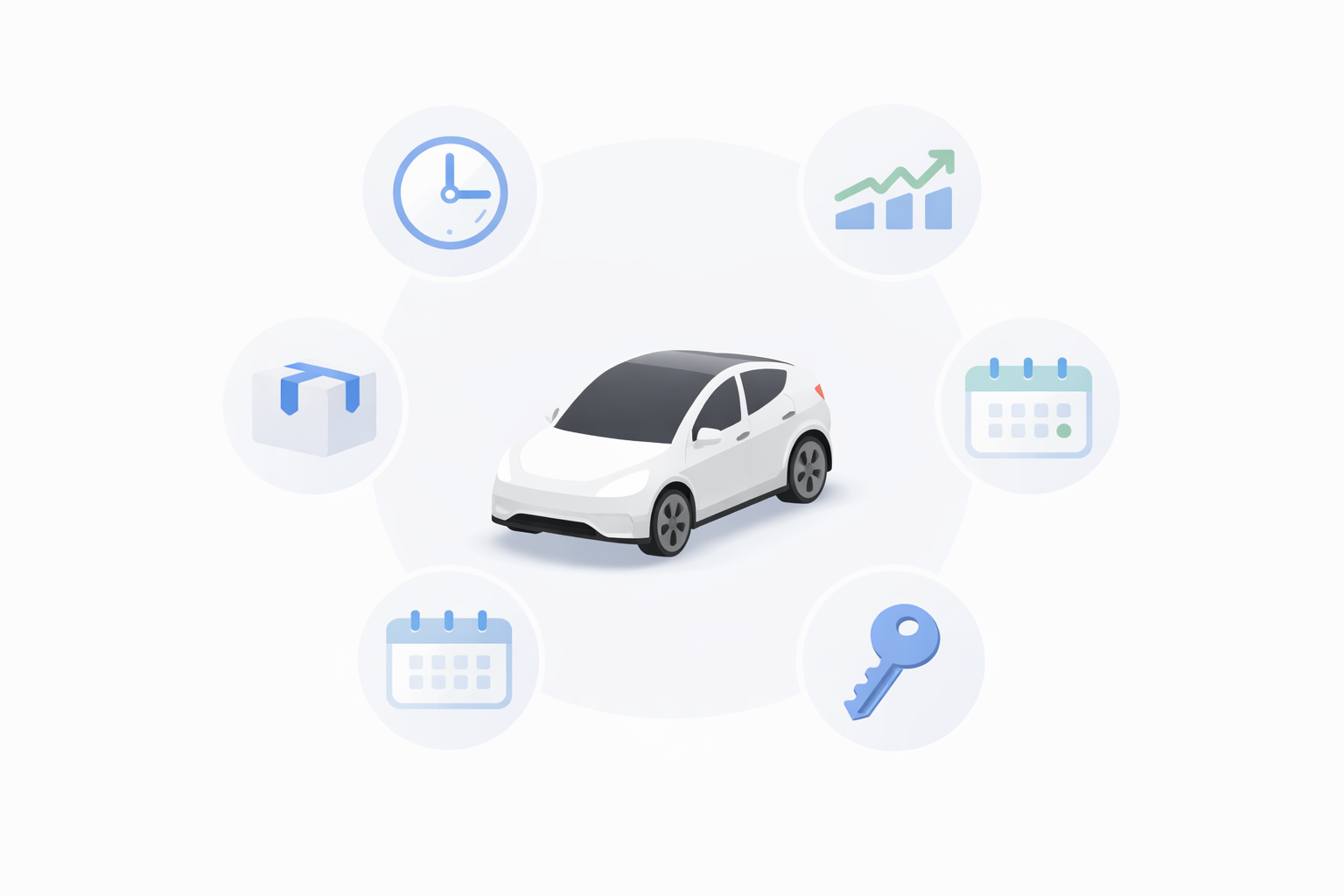
Pricing is one of the most sensitive and strategic elements of any shared mobility business. It directly impacts demand, fleet utilization, customer retention, and long-term profitability. Yet many operators continue to rely on a single pricing model - even as their market conditions, user behavior, and fleet composition evolve.
In practice, this approach rarely works over time.
Modern shared mobility requires pricing flexibility: the ability to launch, combine, and continuously adjust tariff models as the business grows and matures. This is exactly the challenge CT Mobility was designed to address.
Multiple pricing models in one platform
CT Mobility supports multiple pricing models within a single platform, allowing operators to manage all tariffs centrally and run them in parallel.
⏳ Per-Minute Pricing
Designed for short urban trips and high-turnover usage. This model works best in dense areas where quick access and fast trips dominate demand.
🚘 Per-Kilometer Pricing
Ideal for longer journeys and suburban or intercity usage, where distance is a more accurate cost driver than time.
📈 Dynamic Pricing
Dynamic tariffs calculate the price automatically based on operational logic: for example, the distance between the vehicle’s current location (point A) and a selected destination (point B). This helps operators balance fleet distribution, manage demand, and optimize operational efficiency.
📦 Packages
Prepaid packages (minutes, hours, days, etc.) offer predictable spending for users and encourage repeat usage, improving retention and revenue stability.
🔁 Subscriptions
Recurring subscription plans generate predictable monthly revenue and are well suited for frequent users, long-term rentals, or corporate clients.
💰Leasing with a purchase option
Leasing with a purchase option is a new CT Mobility feature designed for leasing-based vehicle acquisition models. It allows operators to structure long-term vehicle payments using familiar subscription mechanics, fully managed within the platform.
Instead of one-time payments or manual billing, the platform enables leasing payments to be charged automatically on a defined schedule.
Operators can configure:
- Payment frequency: define how often the payment is charged (for example, every 30 days)
- Payment amount: set the fixed payment amount for each period (for example, €600 per month)
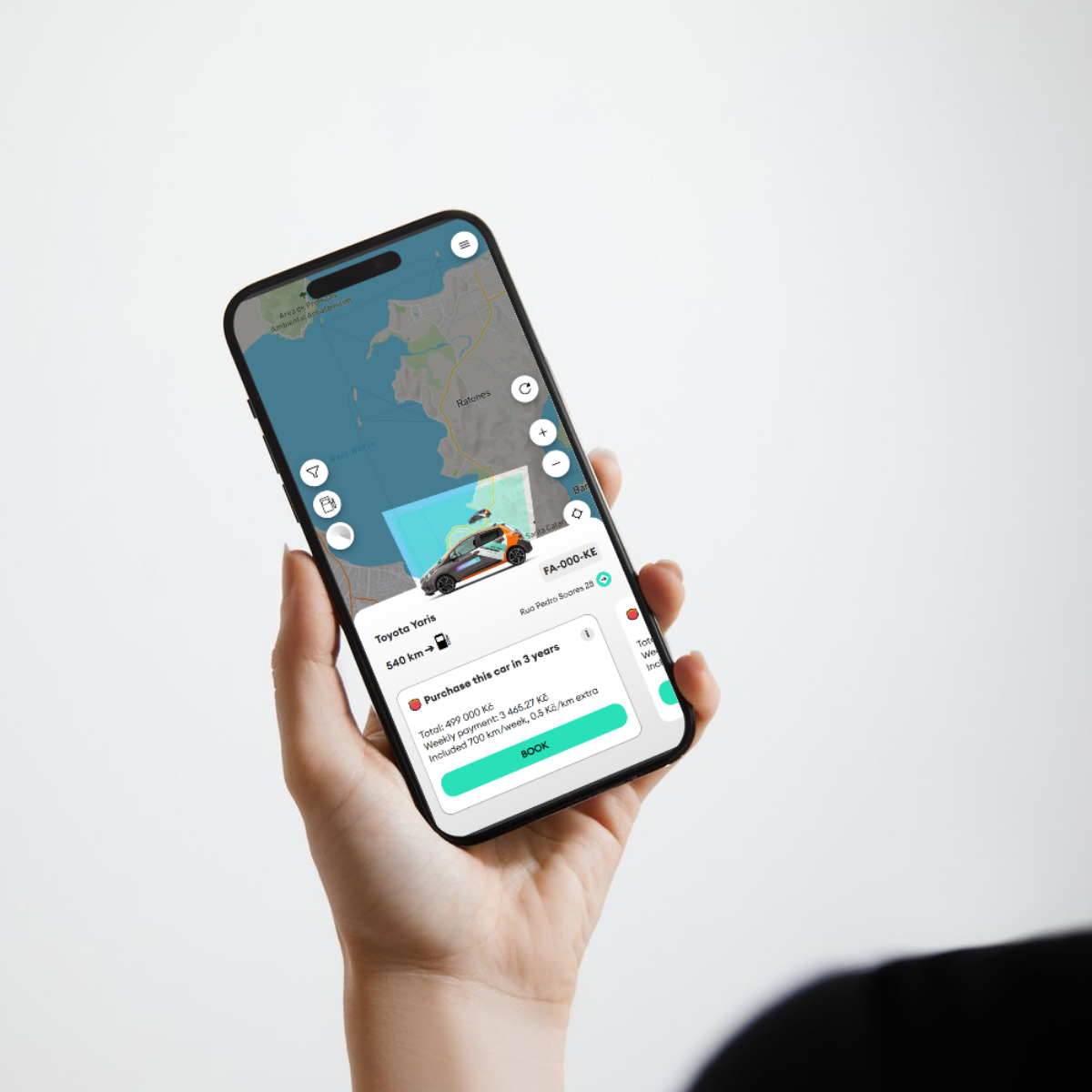
This structure makes the leasing model predictable for both the operator and the user, while keeping all payments automated.
To support long-term leasing contracts, the tariff includes automatic renewal settings. Operators can:
- Enable automatic renewal so payments continue without manual action
- Define a maximum number of renewals, effectively setting the lease duration
Example:
For a 12-month lease, the subscription can be configured as:
💶 Payment period: 30 days
🔄 Maximum renewals: 12
Once the maximum number of renewals is reached, the lease term is completed, allowing the operator to apply purchase logic, contract closure, or ownership transfer according to their business model.
This approach enables operators to launch and manage leasing-based vehicle sales, rent-to-own programs, subscription-to-ownership models. All without introducing external billing systems or custom development.
Advanced flexibility with tariff coefficients
CT Mobility goes beyond standard tariff models by supporting tariff coefficients. This allows a single pricing structure to adapt automatically to different usage scenarios.
Operators can apply coefficients based on:
- Vehicle type (standard, premium, electric)
- User segment (new users, loyal customers, corporate accounts)
- Time conditions (peak and off-peak periods)
In practice, tariff coefficients can be applied to different pricing scenarios, including parking mode, driving mode, prepaid packages, and over-mileage cases. Coefficients can be calculated either by multiplication (percentage-based adjustment) or by adding a fixed value, giving operators precise control over pricing behavior in each usage mode.
Tariff simulation
Complex pricing requires transparency, both for operators and support teams. When multiple tariffs, conditions, and user parameters are involved, it’s critical to understand why a tariff is applied or why it is not. To solve this, CT Mobility includes a built-in Tariff Simulation tool that visualizes the entire tariff application logic step by step.
What does the tariff simulator show?
The simulator allows operators to clearly determine:
- Which tariffs are available for a specific user or vehicle
- Which tariff was ultimately applied
- At which exact step (and for what reason) a tariff became unavailable
This significantly simplifies real-world cases where a user does not see the expected price or a tariff is not applied during rental.
The simulator displays the tariff application process as a sequence of filtering steps. Each tariff is checked against key conditions, including:
- Tariff status (active or inactive)
- Vehicle transmission type
- Vehicle model
- Minimum and maximum mileage limits
- Time-based conditions (hour)
- User age limits (from and to)
This significantly simplifies real-world cases where a user does not see the expected price or a tariff is not applied during rental.
Adapt pricing without rebuilding your system
Markets change. User behavior shifts. Fleets grow and diversify. CT Mobility is designed to support continuous pricing evolution.
Operators can:
- Run several pricing models in parallel
- Assign different tariffs to specific vehicle groups or users
- Launch multiple business models within one app without rebuilding pricing logic
- Test new pricing strategies faster and validate changes before rollout
- Resolve pricing-related support cases with clear step-by-step logic from the simulator
With flexible tariffs, coefficients, and tariff simulation in one platform, CT Mobility helps carsharing operators launch faster, control pricing with confidence, and scale sustainably across new use cases and markets.
Launch your vehicle sharing app in just 15 days with CT Mobility!
No setup fees. Unlimited features.
Free trial period.