October on a rental fleet in Dubai: 8% more trips than September, 4% less revenue in the finance report. Ops blames discounts, finance suspects refunds, and the management meeting is on Thursday. Here’s how we’d walk from one number to the other with an AI assistant connected to the rental platform. The fleet and every amount below are illustrative.
Short answer: Line the two figures up and explain the gap line by line: which dates each report counts, payments that belong to another month, refunds, card holds and deposits, and payments you can’t match to a trip. Whatever you can’t explain stays in the bridge as a visible remainder for finance to look at.
Last updated:
November 11, 2026

The trip report counts trips that ended in October and what they were charged. The revenue figure on the finance slide counts money received in October, whatever month the trip happened in. Those are two honest numbers about two different things, and most of the gap usually lives between them.
The second thing to sort out is holds. A card hold blocks money on the customer’s card; it hasn’t been received, and even a captured deposit doesn’t automatically count as revenue under most accounting policies. If holds slipped into either figure, take them out before doing anything else.
Finance lead: trips up 8% in october, revenue down 4% vs september. explain the gap. dubai time, calendar months. keep payments by payment date separate from october trips and their payments. don’t change anything.
ChatGPT: First, the September figure in your report includes AED 14,000 of card holds that were released later. I’ve left holds out of both months, which puts September at AED 412,000. Here’s the bridge, by payment date:
| Line | AED | Source |
|---|---|---|
| September, payments received | 412,000 | payments |
| August corporate invoices paid in September | −31,000 | invoices, payments |
| More October trips, similar tariff mix | +29,500 | trips, payments |
| Refunds paid in October for September trips | −9,800 | refunds, trips |
| 30-day rental started 15 Oct, charged on return in November | −6,200 | bookings |
| October payments not linked to any trip | +2,600 | payments |
| Not explained | −1,600 | – |
| October, payments received | 395,500 | payments |
ChatGPT: The deposit list for October wasn’t complete when I read it, so October holds are checked only up to 28 October.
The finance lead’s first reaction was “so October was fine”. Mostly, yes. The more useful finding is that September looked good because of August invoices, and that’s worth knowing before anyone sets November targets.
Operator console · demo data
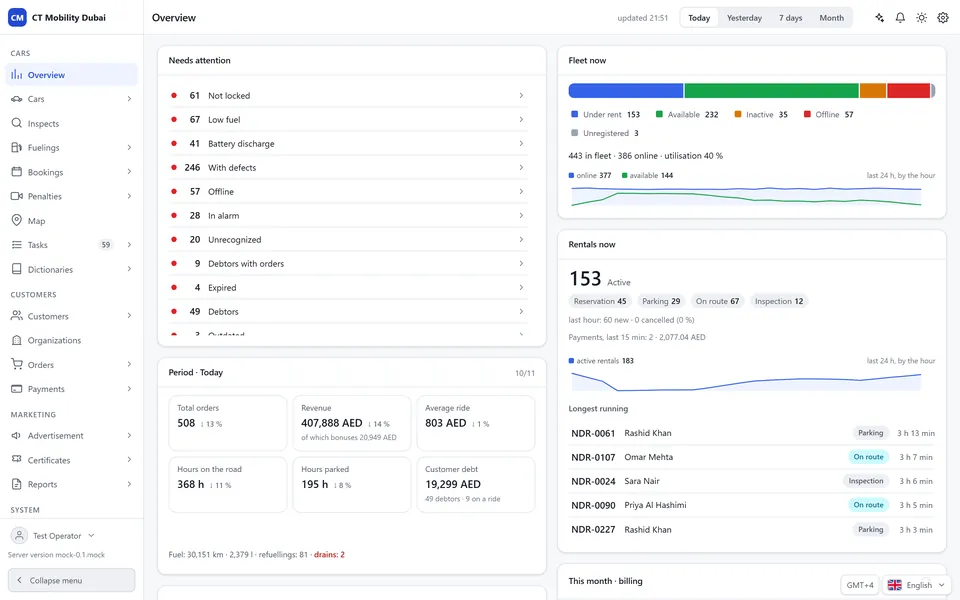
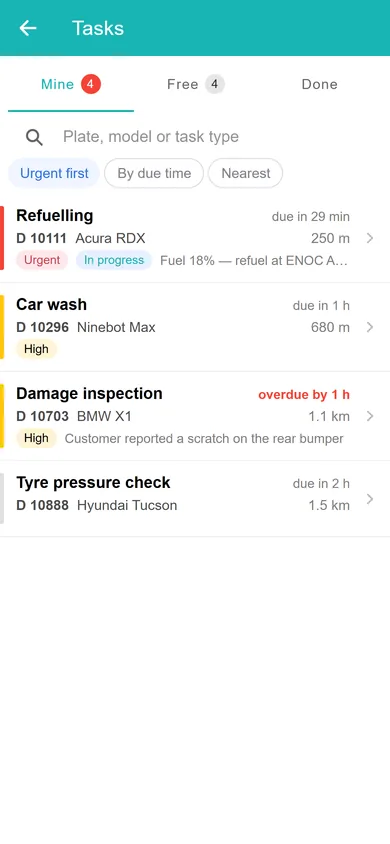
Fleet overview. Utilisation, active rentals, revenue in AED and the cars that need attention: the figures the assistant reads when you ask about your fleet. Technicians get a prioritised task list.
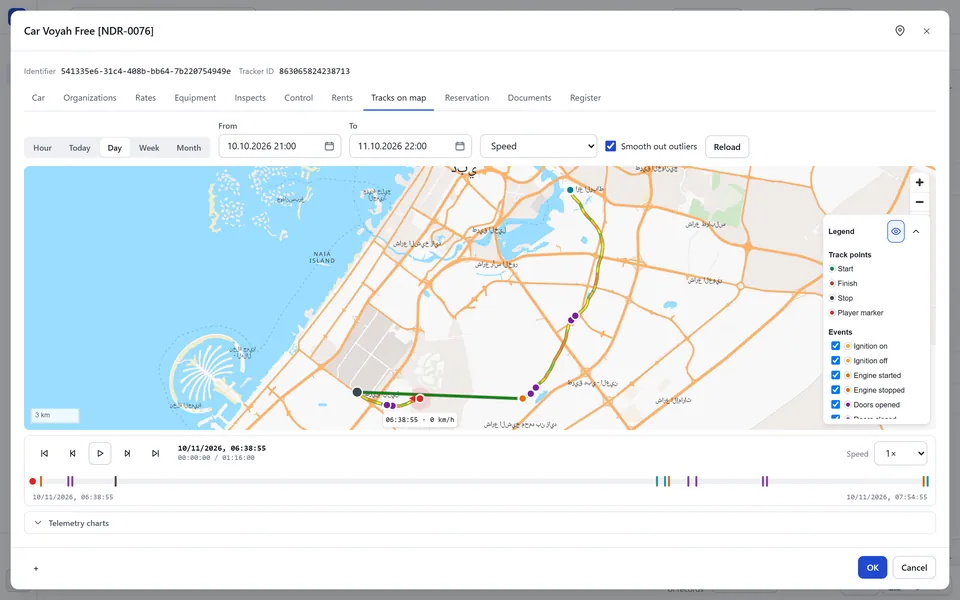
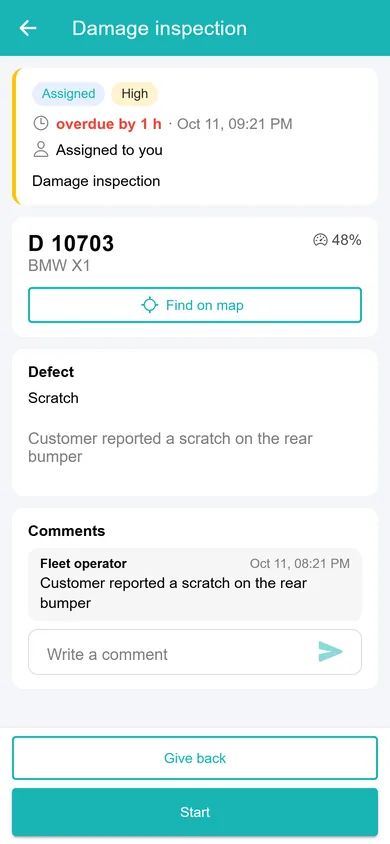
Trips and events. Every trip is stored with ignition, door and speed events, so a question like “who drove this car on Tuesday?” has a recorded answer. Damage reports become tasks for the team.
Every first pass gets something wrong, so push on the method rather than the total. Here the weak spot was the 30-day rental. The assistant had put its whole value in November, the month it would be charged. In a payment-date view that’s correct. Finance, though, spreads a long rental over the days it runs, which puts 17 of its 30 days in October.
Finance lead: now show october trips with their payments, wherever they were paid, and spread the long rental by day.
That second view, a trip cohort instead of a payment month, showed October trip value up about 7%, roughly in line with volume. Both views are useful, and neither is the revenue figure in the accounts. Recognised revenue follows your accounting policy, and the final number is finance’s call.
The value of a conversation is the next question, without another export. “Show me the five largest refunds and the trips they belong to.” “List the payments with no trip, with payer and date.” “Which holds are older than seven days and still not released?” Each answer is a short list that someone in finance can check in ten minutes.
One limit worth keeping in mind. Matching platform records against each other tells you the records agree; it doesn’t tell you the money landed. That’s a bank and payment-provider reconciliation, done with settlement reports and statements, and it stays with finance.
The assistant only reads here. It can draft the list of items to review and a short note on how the bridge was built; people decide what to chase and do the refunds and corrections in their usual process. Ask your fleet, the MCP server built into CT Mobility, works under each employee’s own login and permissions, starts read-only, holds any change it’s allowed to make until someone confirms it, and logs every call. We enable it per installation, on request.
Most holds start at the rental desk, and they’re easier to reconcile when the desk releases them by a written rule: here’s how we’d run a car rental handover, from photos to the deposit.
For quick figures such as revenue by tariff for two months, the AI Data Assistant in the control panel is enough. Planning to connect an AI tool to financial data? Read our guide to MCP for car sharing and rental operators first. The same timeline-first habit helps in support too: see what to check when a customer couldn’t end a rental.
CT Mobility Solutions F.Z.C. · E-Commerce Hub BC-8, Ajman Free Zone C1 Building, Ajman Free Zone, Ajman, United Arab Emirates
Only what the signed-in employee may already see in CT Mobility. The AI receives the data needed for each answer, and your AI provider stores the conversation under its own terms, so choose a provider and plan that fit your data policy.
There’s no public price. We enable it per CT Mobility installation on request, so the quickest way to find out is to book a demo from the Ask your fleet page and ask about your fleet.
We have repeatedly proven this in practice with dozens of launched projects and years of successful work. Ask our clients who have tried several IT solutions but still remain with us.




