Facility teams often share a handful of cars between dozens of technicians and sites — and nobody knows exactly who has which car until something goes wrong. CT Mobility gives MEP and HVAC technicians, cleaning supervisors and site engineers a branded app to book and unlock a pool van by phone, while operations see where every vehicle is, who has it and in what condition it came back. GPS tracking is part of the monthly price of AED 50 per vehicle.
Short answer: CT Mobility is vehicle management software for facility management and field service companies in the UAE: technicians book vans per shift, hand them over with photos, and each trip is linked to the person who drove. From AED 50 per vehicle per month with tracking included; minimum AED 500 per month, hardware billed separately.
Last updated:
October 22, 2026
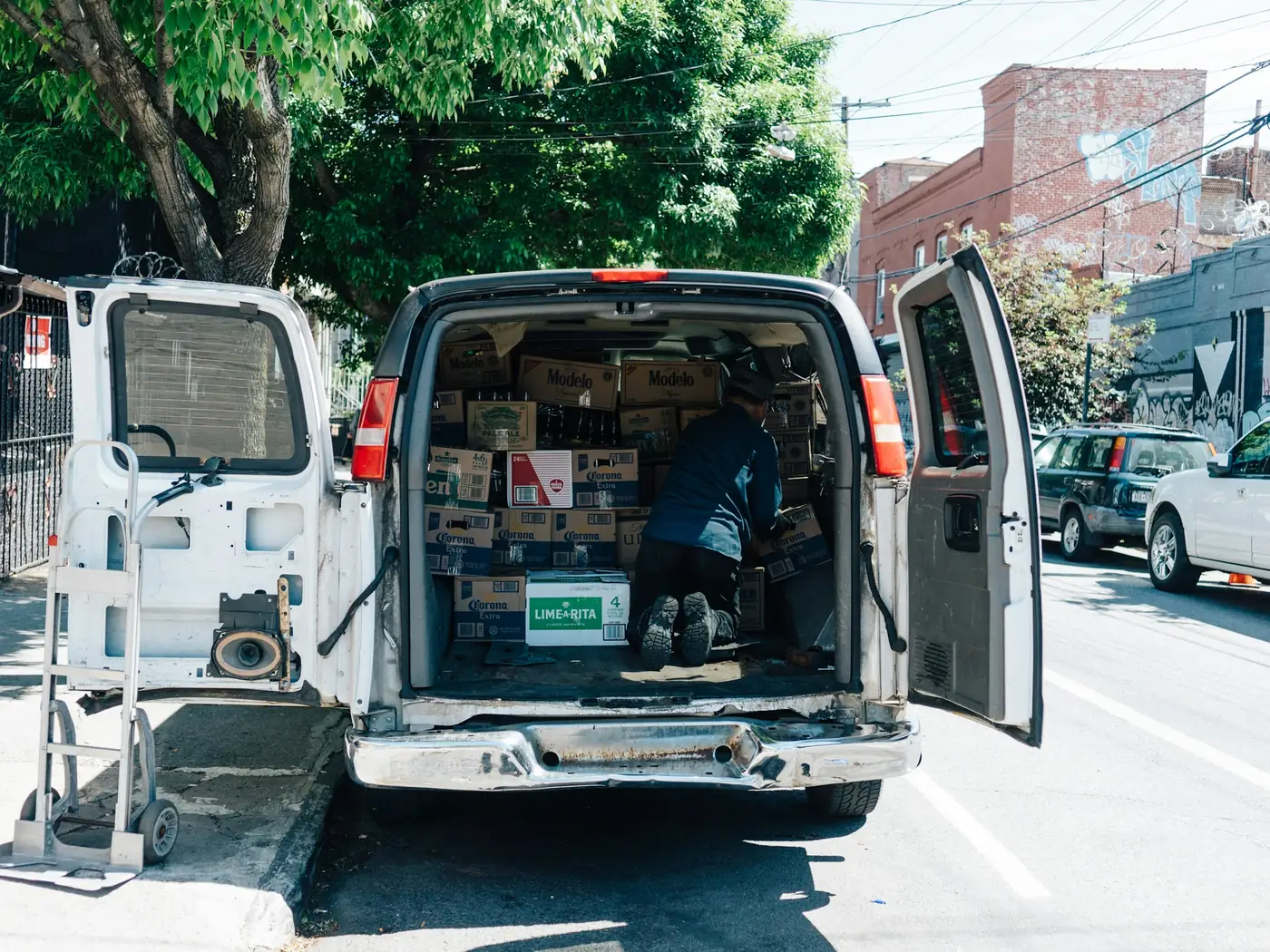
A facility management company in the UAE runs on contracts: towers in Business Bay, a residential community in Dubailand, a mall in Sharjah, government buildings in Abu Dhabi. Technicians move between them for planned maintenance in the day and for call-outs at night. A chiller fault in August does not wait for the morning shift. The vehicles are shared, and the same questions come up every week:
Booking, rules and the phone key work the same way for the whole company: see the vehicle booking system for employees for office staff, sales teams and technicians.
Inside the platform · demo data
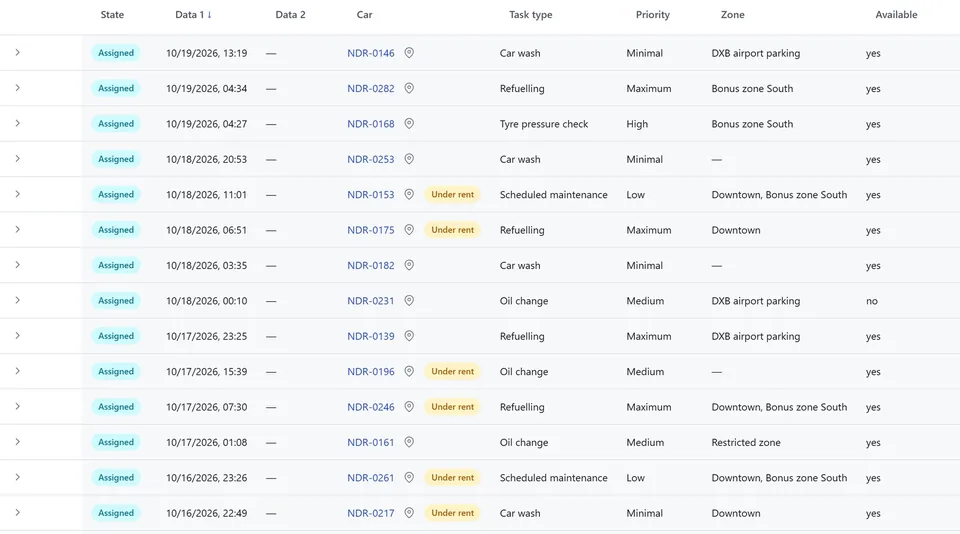
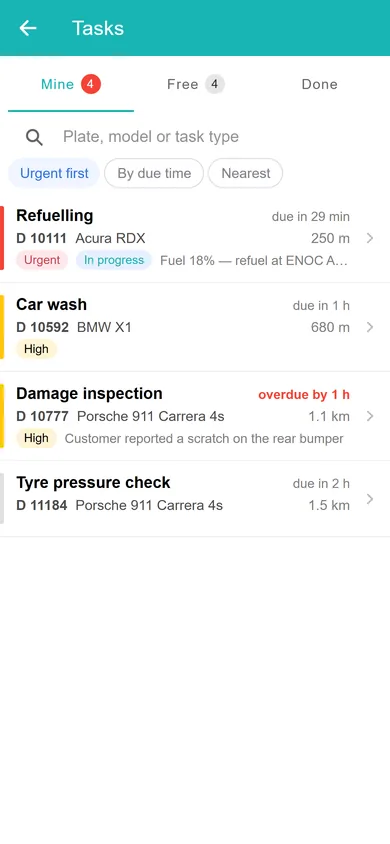
Service tasks. Car washes, refuelling, tyre checks and scheduled maintenance with priority and zone. Each technician sees their own tasks sorted urgent first, with the due time and distance.
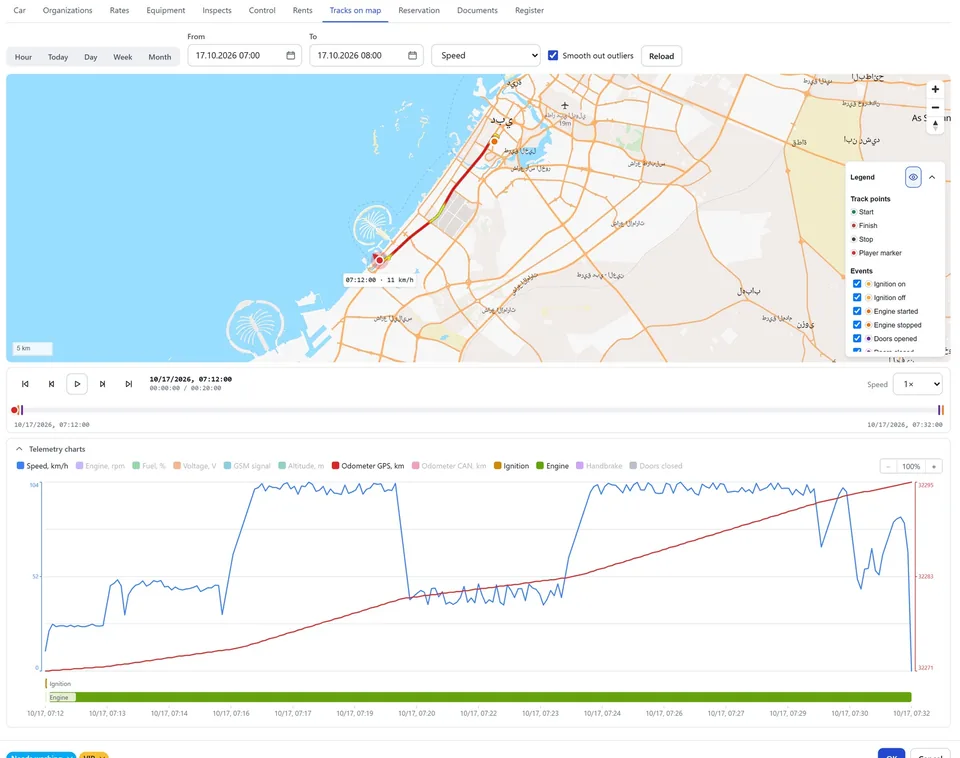
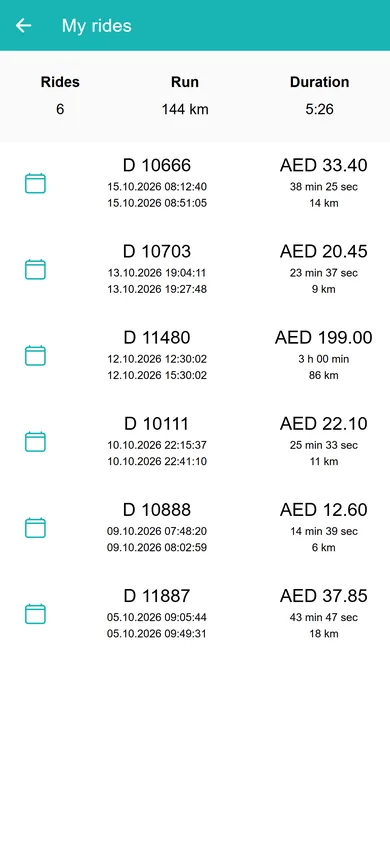
Trip telemetry. Any trip on the map, here from Dubai Marina to DIFC, with speed, ignition and engine charts along the route. Drivers keep their ride history with time, distance and cost in the app.
Permissions by employee, department, vehicle, day and time can follow the way your company is organised. Use one department per contract or per trade: the HVAC team sees its vans, the cleaning supervisors see the cars assigned to soft services, the night shift sees only the vehicles kept for call-outs. A van paid for under one client contract can be limited to that contract's team.
Utilisation by department then becomes a cost report per contract: how many trips, hours and kilometres each contract used. That is useful at contract renewal and when you decide whether a site needs a dedicated vehicle.
Draw a zone around each client site, your depots and the staff accommodation. The live map shows which vans are at which site, and an alert goes out when a vehicle enters or leaves a zone, for example a van that leaves a community in the middle of a job, or arrives at a site at night with no call-out booked. Filter the map by zone before you dispatch: the nearest free van may already be on site.
Some clients ask service providers how their vehicles are checked. With CT Mobility each trip has photos before and after, the reported issues and the name of the driver. Repairs are planned as tasks for your workshop, and a van with a reported defect can be hidden from booking until it is fixed.
If you still use paper for parts of the fleet, the free daily vehicle inspection checklist and the vehicle handover form cover the same checks.
Facility vans park next to the buildings they serve, often at the busiest time of the day. In Dubai, Parkin charges AED 6 per hour in Premium spaces and AED 4 in standard spaces at peak times (8–10am and 4–8pm). In Sharjah, paid parking runs until midnight since 1 July 2026. Parking fines, camera fines and Salik tolls are registered to the vehicle owner, which is your company.
Each fine has a plate and a time. Find the booking that covered that minute and you have the technician who had the van; export the trip as evidence for your internal process. See company car fines and Salik management.
In many FM depots the keys hang on a board in the supervisor's office, with a notebook next to it. CT Mobility replaces the key handover with a phone unlock for every connected van, and the booking is the record. Until all vehicles are connected, keep a car key register for the rest, and see how a phone key compares with a key cabinet.
CT Mobility does not replace your CAFM or helpdesk. Work orders, assets and SLAs stay there. CT Mobility covers the vehicles: who booked which van, where it went, for how long, in what condition it came back and which fines and alerts belong to the trip. Reports can be exported, and an open API is available if you want trip data in another system.
Teams that move between construction sites rather than buildings work the same way; see construction fleet management. Office staff who need a car for a meeting can use the same pool through the vehicle booking system for employees.
| Included in AED 50 per vehicle / month | Billed separately |
|---|---|
| White-label iOS and Android app under your brand | Telematics hardware and installation |
| Fleet management platform and dashboards | M2M SIM cards and mobile data |
| Real-time GPS tracking and monitoring | SMS notification fees |
| Unlimited users, cloud hosting, software updates | |
| Technical support and onboarding |
No setup fee and no per-user charges. Minimum subscription AED 500 per month.
Example: 25 shared vans and pickups cost AED 1,250 per month in subscription. Hardware and installation are quoted per vehicle model.
Pilot for UAE companies: we connect up to 2 of your vehicles with no subscription fee for 3 months, so you can judge the results on your own operations before any commitment. Only the hardware, installation and mobile data are paid. Go live in about 15 days.
CT Mobility Solutions F.Z.C. · E-Commerce Hub BC-8, Ajman Free Zone C1 Building, Ajman Free Zone, Ajman, United Arab Emirates
Yes, any vehicle with a compatible telematics device can be added.
No. Work orders and assets stay in your CAFM or helpdesk. CT Mobility manages the vehicles: bookings, keyless access, trips, photos, fines and alerts.
Yes. Use one department per contract and give access only to that team. Utilisation reports per department then show how much each contract used its vehicles.
Access rules by day and time decide who can book a van at night, and ignition or door activity on a van with no booking triggers an alert.
Yes. Each trip has photos before and after, reported issues and the driver's name, and these records can be exported.
The fine is registered to your company as the vehicle owner. CT Mobility shows which technician had the van at that time; what happens next depends on your company policy.
The subscription is AED 50 per van per month, tracking included, with a minimum of AED 500 a month. Devices and installation are quoted separately. For a first test, two vans can run for 3 months without the subscription fee, paying only for the hardware, installation and mobile data.
We have repeatedly proven this in practice with dozens of launched projects and years of successful work. Ask our clients who have tried several IT solutions but still remain with us.




