Most fleets have cars that are always busy and cars that hardly move. Fleet utilization tells you which is which, so you can share the busy ones better and stop paying for the idle ones. Here is how to measure it from trip data and what to do with the numbers.
Short answer: Fleet utilization is the share of available time, days or distance in which your vehicles are actually used. The simplest vehicle utilization rate is hours in use divided by hours available, per vehicle and per period. Measure it from trip records, compare vehicles and periods, then share, move or remove the cars that stay idle.
Last updated:
October 22, 2026
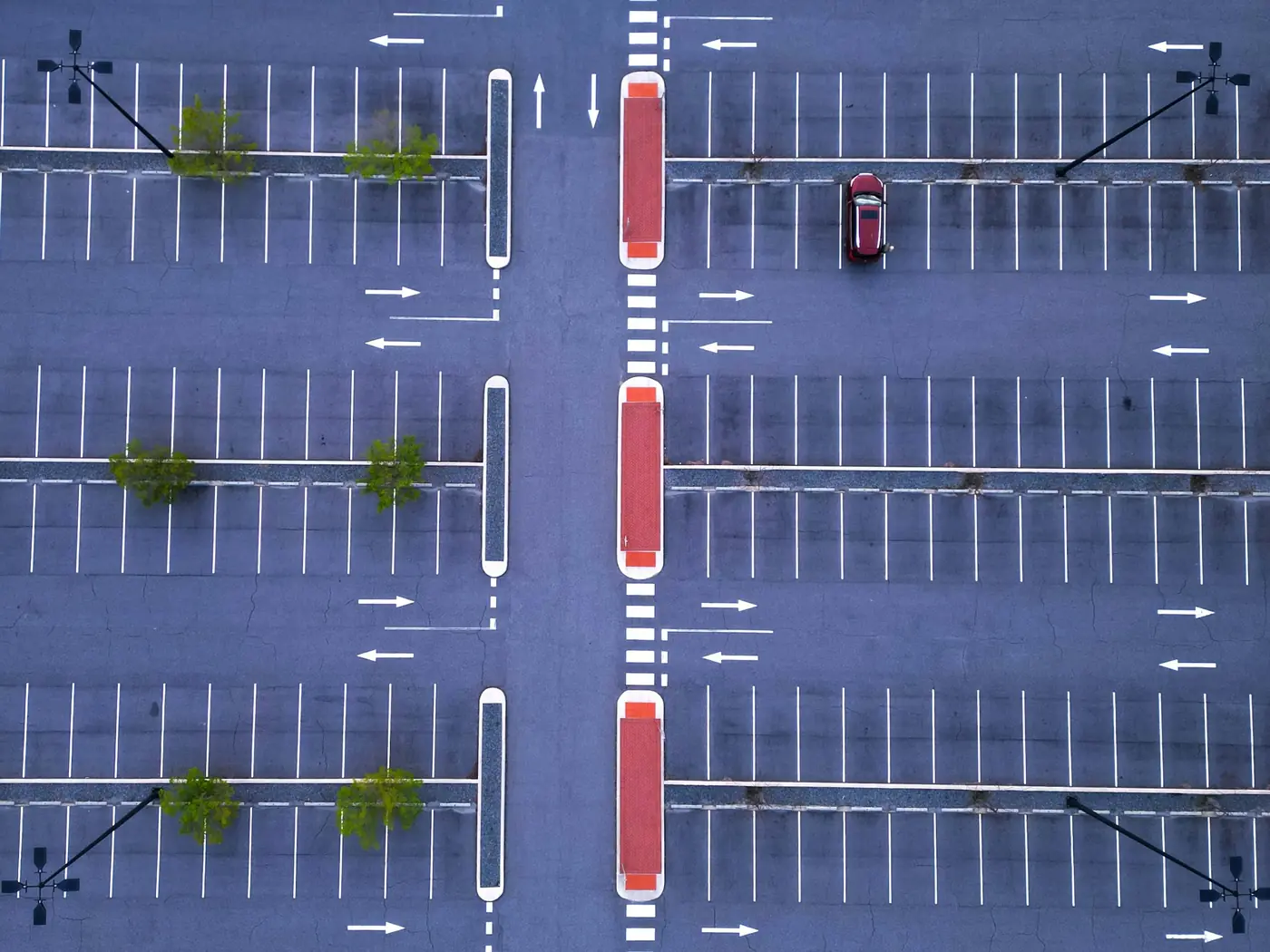
Fleet utilization measures how much of the available capacity of your vehicles is used. A car that is driven 3 hours of a 9-hour working day is used a third of the time; a car that stands in the car park all week is not used at all, but still costs its lease, insurance, registration and parking.
Pick the measure that fits your fleet and keep it the same over time:
| Measure | Formula | Good for |
|---|---|---|
| Time-based | Hours in use ÷ hours available | Pool cars, car sharing, hourly rental |
| Day-based | Days with at least one trip ÷ working days | Company cars, field teams |
| Rental days | Days on rent ÷ days in the period | Car rental |
| Distance-based | Kilometres driven ÷ planned kilometres | Leased cars with a mileage limit |
| Trips per vehicle | Number of trips per vehicle per period | Sharing and pools with short trips |
Example: a pool car is available 9 hours on 22 working days, which is 198 hours a month. It was used for 60 hours, so its time-based utilization is 60 ÷ 198 = 30%. If it had trips on 15 of the 22 days, its day-based utilization is 68%.
Automatic trip records are the most reliable source, because nobody has to fill them in.
Inside the platform · demo data
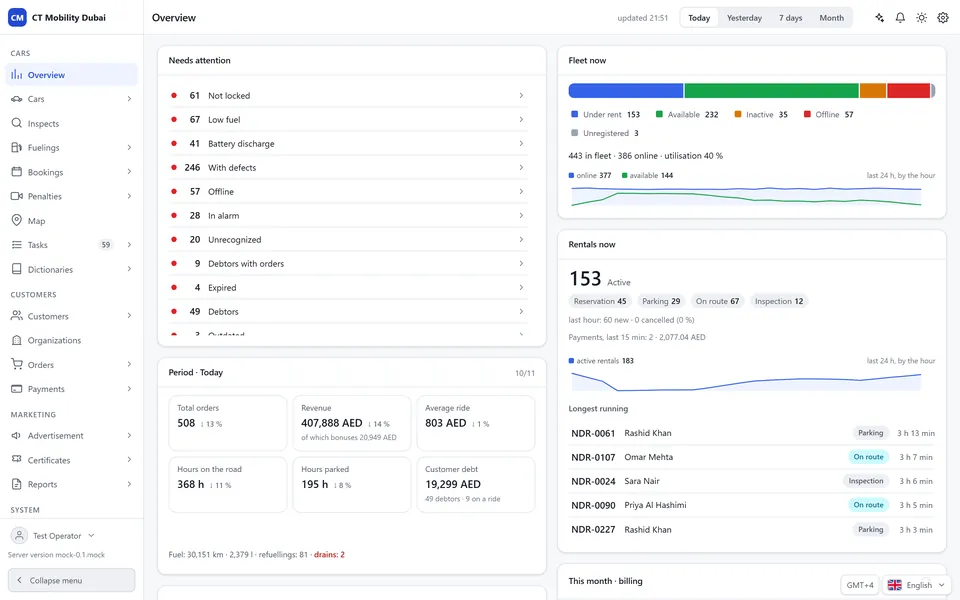
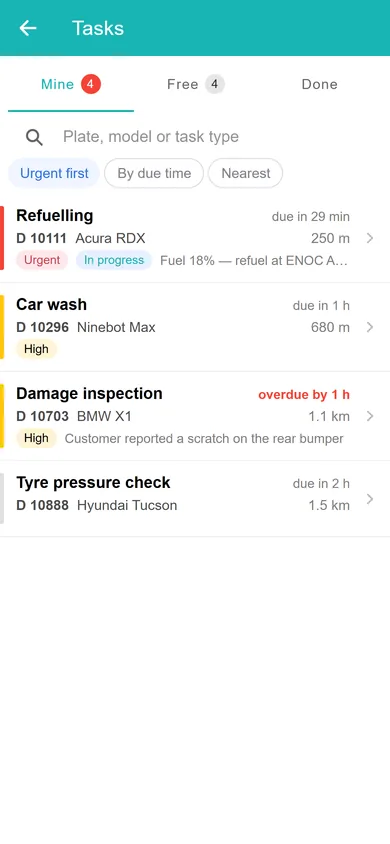
Operator console. What needs attention right now, fleet utilisation, active rentals and revenue in AED. Technicians get a prioritised task list with the distance to each car.
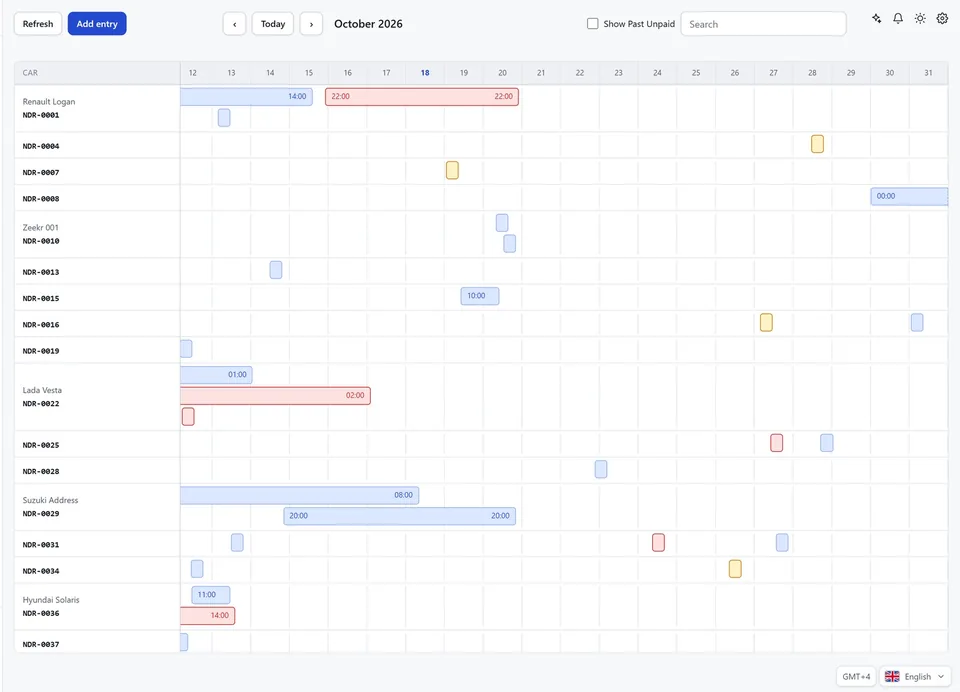
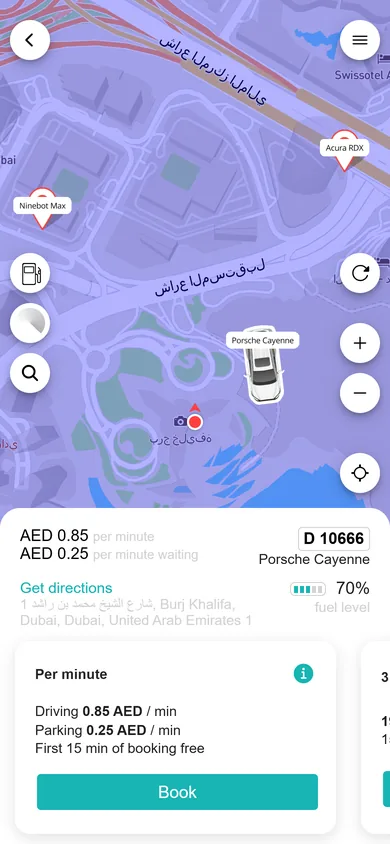
Bookings calendar. Cars as rows and reservations as bars, so free slots are visible at a glance. In the app, the car card shows the rate and fuel level, and the car is booked with one tap.
There is no single benchmark: a car rental fleet, a car sharing service and a pool of cars for office staff run at very different levels. Compare each vehicle with the rest of your fleet and each month with your own baseline. Low numbers on a few cars point to idle vehicles; high numbers everywhere, with staff waiting for cars, point to a fleet that is too small at peak times.
In CT Mobility every trip is recorded automatically with the driver, start and end time, route and mileage. Trip history per vehicle, statistics on trips, vehicles and utilisation, and exportable reports give you the numbers above without a manual log. You can also ask in plain language in the control panel with the AI Data Assistant, for example “Which cars had no trips in the last 14 days?”.
For shared company cars see pool car management and motor pool management software; for booking rules see the vehicle booking system for employees.
Pilot for UAE companies: we connect up to 2 of your vehicles with no subscription fee for 3 months, so you can judge the results on your own operations before any commitment. Only the hardware, installation and mobile data are paid. Go live in about 15 days.
CT Mobility Solutions F.Z.C. · E-Commerce Hub BC-8, Ajman Free Zone C1 Building, Ajman Free Zone, Ajman, United Arab Emirates
The share of available time, days or distance in which fleet vehicles are actually used, measured per vehicle and per period.
Divide the hours a vehicle was in use by the hours it was available in the period. For example, 60 hours of use out of 198 available hours is 30%. Day-based and rental-day measures work the same way.
There is no universal number. Compare each vehicle with the rest of your fleet and with your own baseline; very low numbers point to idle cars, very high numbers with waiting staff to a fleet that is too small.
Matching the number and type of vehicles to real demand: sharing under-used cars, moving them between sites, removing long-term idle ones and covering peaks with short-term options.
Trip records with start and end time and mileage for every vehicle, ideally recorded automatically by telematics or a booking system, plus the hours or days each vehicle was available.
Share cars between employees, let staff book them in an app, replace key handovers with a phone key, set fair access rules and review cars that are booked but not driven.
We have repeatedly proven this in practice with dozens of launched projects and years of successful work. Ask our clients who have tried several IT solutions but still remain with us.




