For teams planning or running car share in an Australian or New Zealand city: what Sydney, Brisbane and Auckland ask of an operator, card holds, GST and the driver check. Outside figures are linked to their sources as they stood on 21 November 2026.
Short answer: CT Mobility is white-label car sharing software: an app under your brand for iOS and Android, a control panel for your team and keyless access to the cars, with no setup fee, a monthly fee per active vehicle, fleets from one vehicle and a launch in about 15 days. Stripe, PayPal, Apple Pay and Google Pay are among the more than 15 payment gateways we’ve integrated. We have no client, office or partner in Australia or New Zealand yet; the car sharing operators we can name run in Prague, Cyprus, Belgrade and Phuket.
Last updated:
November 21, 2026
Street parking for a shared car needs the council’s permission: in Sydney a dedicated bay, in Brisbane a permit for resident parking. Several of the conditions are about data.
| Council | What its own documents say | What to ask any vendor, us included |
|---|---|---|
| City of Sydney | Members can book 24 hours a day, for an hour or less. Every month the operator reports, in a template the City sets or approves, members by postcode and suburb, bookings and their duration and the trip distance per vehicle, and the hours each car was available. These reports are audited independently every three years (source) | Which of these figures does your system hold? Can we export them per car and per month without a developer? |
| Brisbane City Council | A car-share permit costs $507.40 per vehicle and runs for 12 months. The car must be registered in Queensland and carry the operator’s logo and contact details (source). If the council asks, the operator provides quarterly business reports (source) | Can each car carry its permit expiry date, with a reminder before it runs out? |
Sydney also measures use. In a low coverage area an existing operator gets a new space only if its three nearest spaces are each used at least 18 times a month or four hours a day, averaged over three months (source). By our arithmetic, a car booked four times a week falls just short of 18. Our post on fleet utilisation shows how to measure it.
For a new entrant: the City doesn’t currently issue permits for free-floating car share, and it isn’t considering new on-street spaces in Central Sydney (source). Its car share page counts over 800 dedicated on-street spaces since 2008 and over 50,000 memberships, and says it is working through existing applications before it accepts new ones (source).
Brisbane’s guide puts legal parking on the registered owner, so the operator must keep customers out of clearways. Peer-to-peer car sharing, where residents rent out their own cars through a platform, can’t get a permit (source). By our reading, both councils write for a company with its own fleet; if members will share private cars, ask an adviser in your state which rules apply.
Our side: the control panel exports customisable reports, with statistics on users, rides, vehicles and utilisation. The Open API sends events through webhooks, and SQL queries over HTTP pull data into Google Sheets or Power BI. We don’t have a ready-made report in the City of Sydney template; send it to us and we’ll show which columns the export covers.
In Auckland an operator that wants parking benefits applies to Auckland Transport (AT) for approval. AT’s Car Share Framework, version 3 of September 2025, lasts at most 3 years per approval and asks for a rental service licence under the Land Transport Rule: Operator Licensing 2017. The operator accepts liability for infringement costs its customers run up, keeps cars available 24/7 and sends AT a monthly data report in a standardised format. Each car gets a digital permit linked to its plate, AT designates at most 400 spaces across the region, and peer-to-peer models are outside the framework (source).
The data list goes further than Sydney’s: unique users and trips per user for each car, the time a car stands unhired at each location, the origin and destination street of each trip, average hire cost per user and where cars were relocated (source). Ask every vendor which of these fields their system records today. On our platform zones are drawn in the control panel with geofencing, and every trip keeps the driver, the times and the route. Putting that into AT’s format is integration work, scoped once AT gives you the specifics at approval.
Inside the platform · demo data
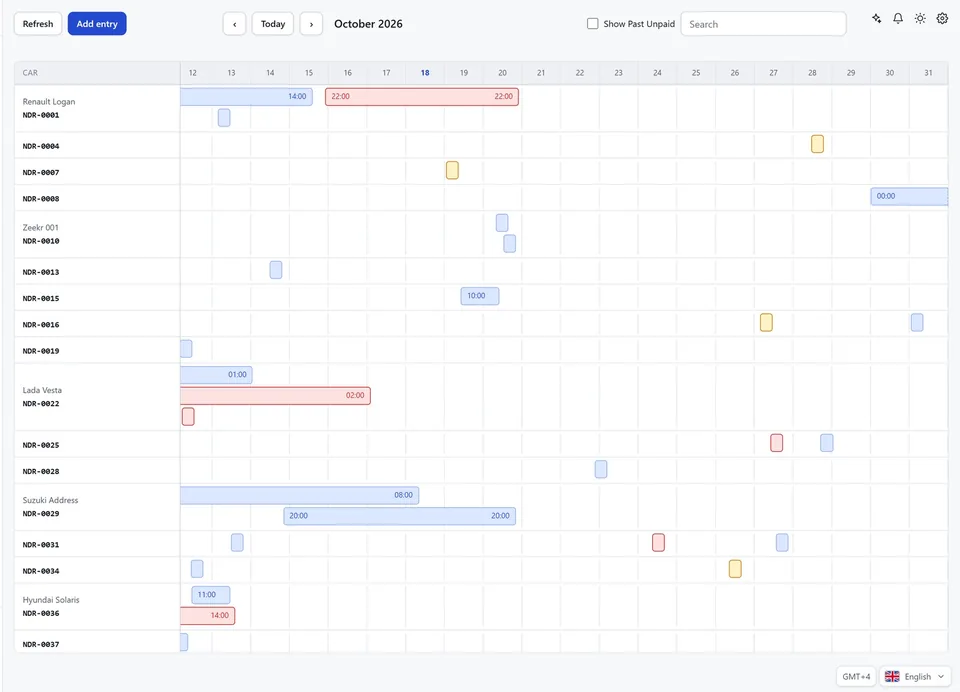
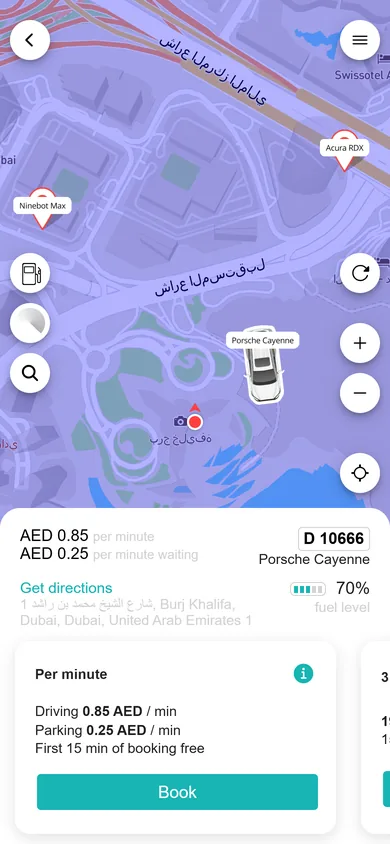
Bookings calendar. Cars as rows and reservations as bars, so free slots are visible at a glance. In the app, the car card shows the rate and fuel level, and the car is booked with one tap.
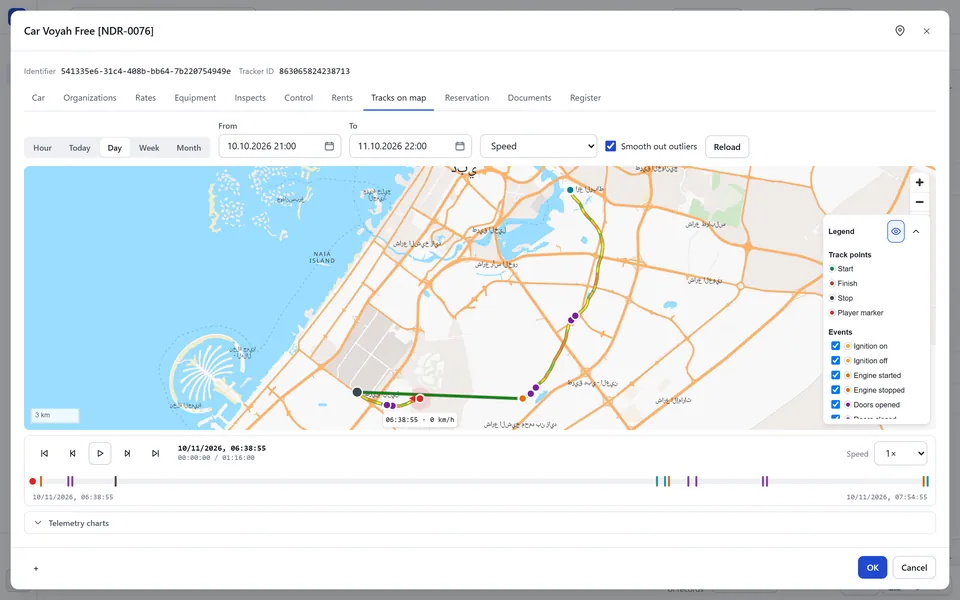
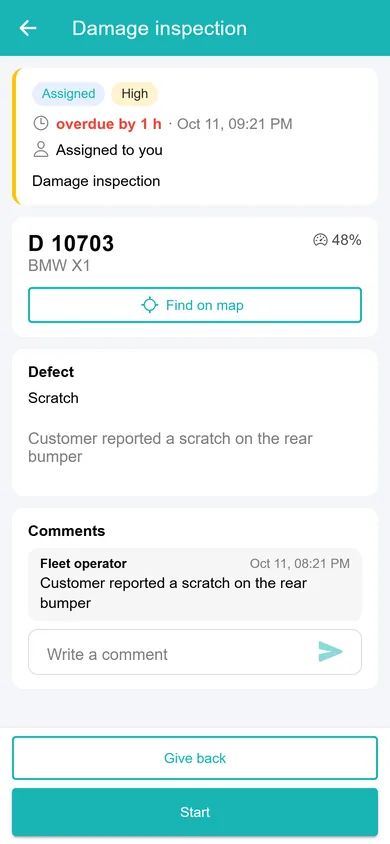
Trip history. Replay any trip with ignition, door and speed events to see exactly who drove and how. Damage reported by a customer becomes a task for your team.
Sydney asks operators to let any licensed driver over 18 join, subject to reasonable creditworthiness and driving history checks (source). Auckland allows similar restrictions (source).
On our platform customers pass ID and driving licence verification with liveness detection before they get access to a car. Identity verification platforms such as Sumsub can be connected, and other providers can be integrated on request. Our site doesn’t describe a credit or driving history check, so decide who runs it. Which state and New Zealand licences the document check reads is a question to send us with sample images.
Stripe’s documentation says an authorisation for an online card payment is usually valid for 7 days, 4 days and 18 hours for a Visa payment started by the merchant, and the funds are released if they aren’t captured in time (source). Our reading: a hold taken when someone books a week ahead may lapse before the trip starts.
Inland Revenue says GST in New Zealand is charged at 15% (source). How GST applies to an hourly booking or a damage charge, on either side of the Tasman, is a question for your accountant. Our site says nothing about calculating Australian or New Zealand GST, so bring your accountant’s answer to the first call.
Our side: Stripe, PayPal, Apple Pay and Google Pay are among the gateways we’ve integrated, and several can run at the same time. The billing module handles deposits, refunds and unpaid invoices, and payments can run in several currencies; confirm yours with the gateway you choose.
The car sharing operators we can name are Anytime in Prague, with more than 600,000 rentals since 2019, RideNow in Cyprus, with more than 500 cars, AnyGo in Belgrade, and Funny Time in Phuket. We’ve been on the market since 2015.
There’s no setup fee. The monthly fee is by quote, per active vehicle, with discounts for larger fleets, and you can start with one vehicle. Each car needs a telematics unit; we work with devices such as Teltonika and quote the hardware after reviewing your car models. A launch takes about 15 days once the vehicles and hardware are ready. Council fees come on top: by our arithmetic, ten cars with Brisbane permits cost $5,074 a year.
With 10 to 50 cars, check each vendor’s monthly minimum: Wunder Mobility publishes EUR 18,250 with 500 vehicles included (source). See CT Mobility as an ATOM Mobility alternative and as a Wunder Mobility alternative.
Before the first call with us or with anyone else:
CT Mobility Solutions F.Z.C. · E-Commerce Hub BC-8, Ajman Free Zone C1 Building, Ajman Free Zone, Ajman, United Arab Emirates
A provider that isn’t connected yet can be suggested, and connecting a new system is scoped per project. The gateways already integrated include Stripe, PayPal, Apple Pay and Google Pay.
Yes. Supported vehicle types include cars, scooters and e-scooters, bicycles and e-bikes and mopeds, managed in one console. See scooter sharing software.
Yes. Employees book a pool car in the app, unlock it with their phone and return it to the company parking. Bookings can be limited by role, team and usage schedule. See corporate car sharing software.
We have repeatedly proven this in practice with dozens of launched projects and years of successful work. Ask our clients who have tried several IT solutions but still remain with us.




