CT Mobility is white-label software for car sharing, car rental and scooter sharing, and operators in Prague, Cyprus and Belgrade run their fleets on it. If you’re planning a service in a European city, this page covers what city permits ask of your software, how people pay from country to country and what it costs to start. Figures from outside sources are linked to those sources as they stood on 13 November 2026.
Short answer: CT Mobility is white-label car sharing software, on the market since 2015: an app under your brand for iOS and Android, a control panel for your team and keyless access to the cars. European operators on the platform include Anytime in Prague (more than 600,000 rentals since 2019), RideNow in Cyprus (more than 500 cars) and AnyGo in Belgrade. There is no setup fee, the monthly fee is charged per active vehicle, a fleet can start with one vehicle and a typical launch takes about 15 days.
Last updated:
November 13, 2026

Since 2019 Anytime has provided Prague with more than 600,000 car sharing rentals, using hybrid and electric cars. RideNow in Cyprus started with 10 cars in 2020 and now runs over 500. AnyGo runs car sharing in Belgrade. Moby Bikes from Ireland provides e-bikes and uses the platform for its London and Rotterdam operations.
Three of them also appear in the INVERS Mobility Barometer “European Car Sharing 2025”, a third-party market report that gives selected examples of operators country by country. Anytime is one of the names under the Czech Republic, RideNow is the name under Cyprus and AnyGo, spelled Anygo in the report, the name under Serbia (source, pages 17 and 19). The Czech car sharing association lists Anytime among its members and counts 2,149 shared cars in the country in 2026 (source).
INVERS counts more than 129,000 shared cars across Europe. About 67,000 are in free-floating services run by up to 80 operators. The other 62,000 are station-based and spread over at least 470 operators in 25 countries, and the report notes that a significant number of those operators are small and community-centred (source). Germany’s car sharing association, the Bundesverband Carsharing, counted 293 operators in January 2026. The 287 it files under station-based and combined systems had 18,390 vehicles between them, about 64 each by our arithmetic; the six free-floating operators had 24,800 (source).
For a fleet that size, a software vendor’s monthly minimum is the first thing to check. Wunder Mobility, for one, publishes a monthly minimum of EUR 18,250 with 500 vehicles included (source). We charge no setup fee and bill per active vehicle, so 50 cars are billed as 50 cars. We’ve put the published prices side by side on two pages: CT Mobility as a Wunder Mobility alternative and as an ATOM Mobility alternative.
Inside the platform · demo data
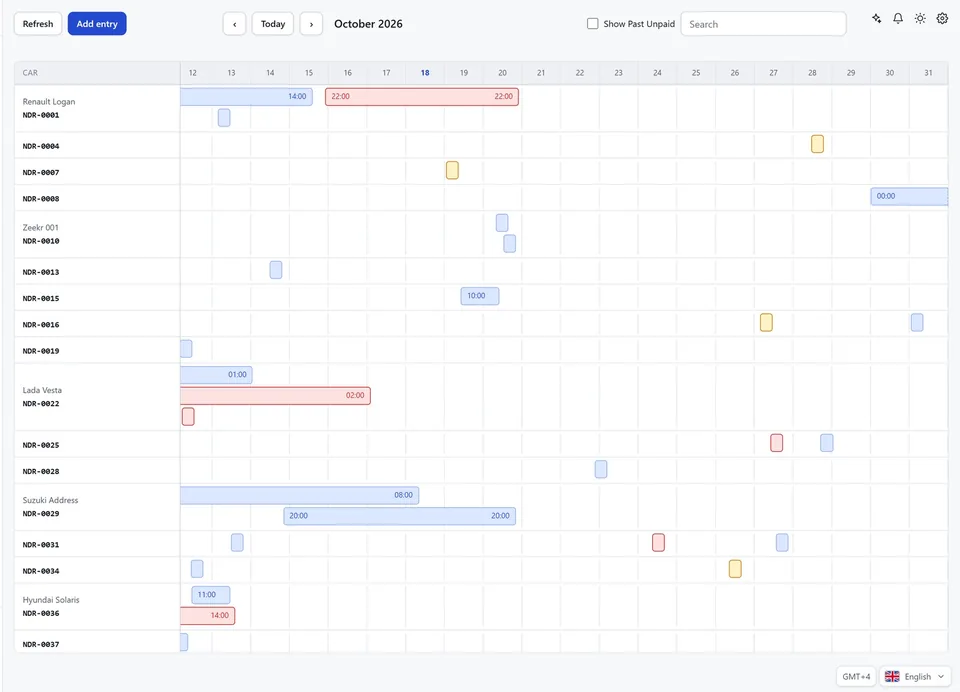
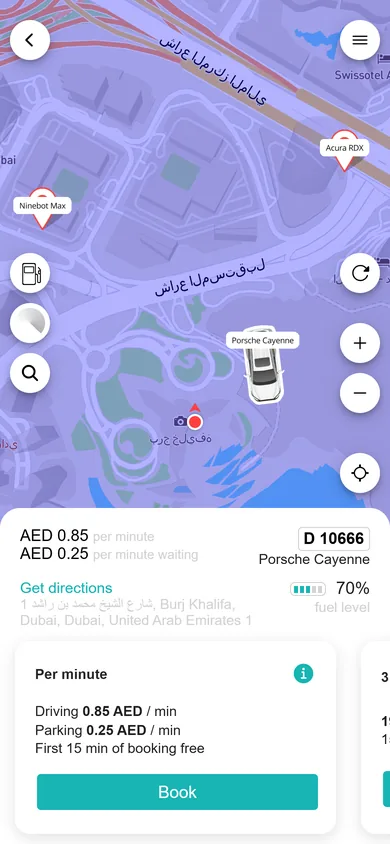
Bookings calendar. Cars as rows and reservations as bars, so free slots are visible at a glance. In the app, the car card shows the rate and fuel level, and the car is booked with one tap.
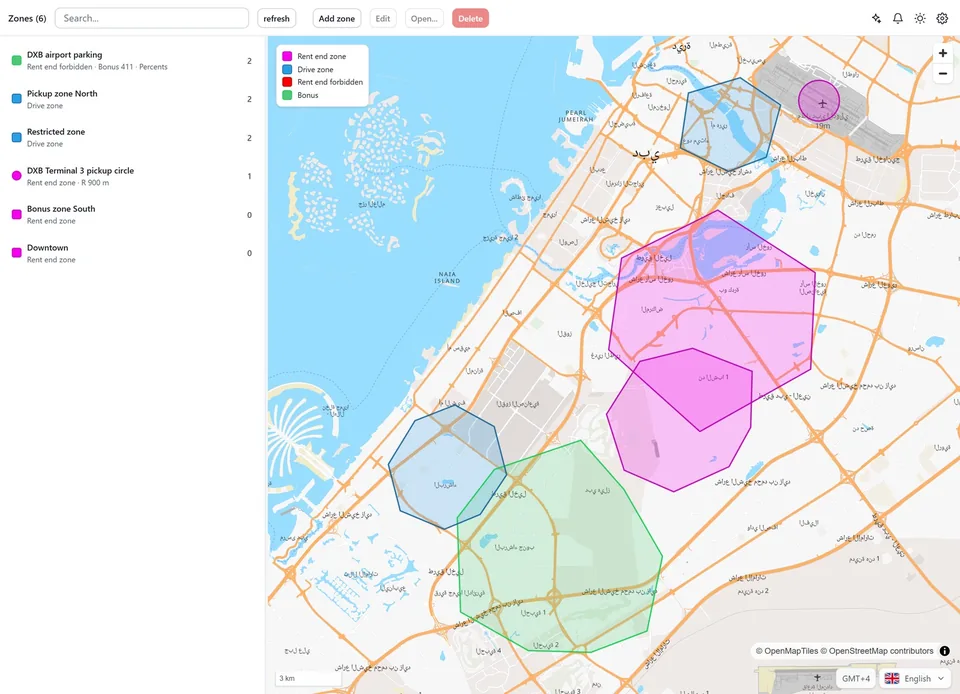
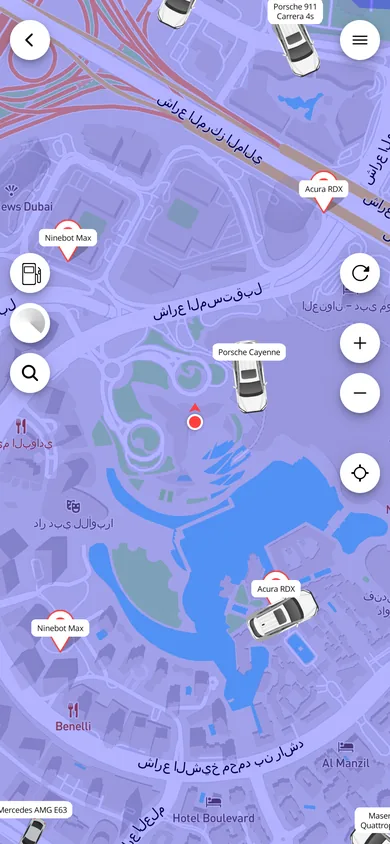
Zones. Rent-end zones, drive zones, restricted zones and an airport parking zone drawn on the map. Customers see the available cars around them in the app.
Parking for shared cars comes with conditions, and they differ from one authority to the next. Some of them end up as requirements for your software. Five examples, each linked to the original text:
| Where | What the rule says | What to check in the software |
|---|---|---|
| Germany, Carsharing Act | Spaces for station-based car sharing on federal roads inside towns go to an operator through a selection procedure. The criteria in the annex include booking, pick-up and return 24 hours a day, rentals from one hour and an hourly rate of no more than 20% of the daily price (source) | Booking and return at any hour without staff. An hourly tariff next to the daily one |
| Dublin | Car club vehicles can park in pay-and-display spaces without a ticket once the operator has a car club licence and a car club parking permit for the vehicle from Dublin City Council (source) | A vehicle list with number plates, kept in step with the permits |
| Copenhagen | To get a licence for shared cars with a fixed space, the operator must document that the car can be used without a new agreement each time and that members pay for the time used and the kilometres driven (source) | One agreement accepted at sign-up. A tariff with a time part and a distance part |
| France | The local mobility authority (AOM) can award an “autopartage” label to vehicles that meet requirements it sets in advance. These must be environmental, and the label may also cover information for users, the booking system and vehicle maintenance. Labelled vehicles can get reserved parking (source) | Get the authority’s list first, then go through the booking flow and the maintenance records against it |
| United Kingdom | A driver whose licence was issued in England, Wales or Scotland can create a check code, valid for 21 days, to share the driving record (source). CoMoUK’s accreditation criteria for car clubs ask for prices by mile, by time or both, cars available 24 hours a day and, for full accreditation, usage and fleet data twice a year (source) | The step in sign-up where the check code is entered, and who reviews it. Usage and fleet reports you can export |
The third column is a checklist to put to any vendor, us included. On our site you can already see per-minute, hourly and daily tariffs, time- and distance-based pricing, zones drawn on the map, ID and driving licence verification at sign-up and report exports. Ask for a demo with your permit text open next to it.
PSD2’s strong customer authentication requirement has applied since September 2019 (source). Ask any vendor how its app handles the bank’s confirmation step when a customer adds a card.
In the ECB’s 2024 survey of the euro area, 48% of online payments were made by card. E-payment solutions, a group that includes wallets, PayPal and iDEAL, led in the Netherlands with 76% and held a large share in Germany (46%) and Portugal (33%). In the remaining euro area countries cards were the most used instrument (source).
We’ve integrated more than 15 payment gateways, including Stripe, PayPal, Apple Pay and Google Pay, and local ones such as GPwebpay and JCC. Several gateways can run at the same time, and payments can run in several currencies. If your customers expect a local method such as iDEAL, BLIK or TWINT, raise it in the first call. We’ll tell you whether a gateway we already work with covers it or whether it needs integration work.
The GDPR, Regulation (EU) 2016/679, has applied since 25 May 2018 (source). A car sharing service keeps copies of driving licences and a record of every trip, so settle four things in writing with any vendor before you sign, us included: the data processing agreement, where the data is hosted, which sub-processors handle it, and how you get your data out if you leave.
There’s no setup fee. Outside the UAE the monthly fee is by quote, per active vehicle, with discounts for larger fleets, and you can start with one vehicle. Telematics hardware is quoted separately once we know your car models; we work with Teltonika, Queclink, Jimi IoT and Comodule units. The customer app goes out under your brand for iOS and Android and supports any number of languages. A typical launch takes about 15 days once the cars and devices are ready.
Four things worth doing this week if you’re planning a launch:
CT Mobility Solutions F.Z.C. · E-Commerce Hub BC-8, Ajman Free Zone C1 Building, Ajman Free Zone, Ajman, United Arab Emirates
Yes. The platform runs free-floating zones, fixed stations, round-trip and one-way rentals and corporate car sharing, and you can change the model as the service grows.
Cars, e-scooters, mopeds, bicycles and e-bikes are managed in one control panel, and one fleet can mix telematics devices from different suppliers.
Anytime’s fleet in Prague is hybrid and electric cars. Through the telematics unit the platform reads the battery level together with location and mileage. If you need a link to a particular charging network, raise it with us in the first call.
We have repeatedly proven this in practice with dozens of launched projects and years of successful work. Ask our clients who have tried several IT solutions but still remain with us.




