CT Mobility is a white-label platform for e-scooter, bike, e-bike and moped sharing with AI built into how your team works with data. Operations, finance and support ask about vehicles, rides, riders, zones, payments and alarms in plain words, in the control panel or in ChatGPT and Claude, and get answers from your own platform data.
Short answer: AI scooter sharing software lets operators ask about e-scooters, e-bikes and mopeds, rides, zones and alarms in plain words instead of building reports. In CT Mobility that is the AI Data Assistant in the control panel and Ask your fleet, a built-in MCP server for ChatGPT, Claude and other MCP clients, available to connect on request. Zone rules, motor blocking and automatic booking are rule-based automation, and the AI does not move vehicles or set prices.
Last updated:
November 2, 2026
In the control panel. The AI Data Assistant answers questions about your data in plain language: rides, revenue, vehicles and usage, without building a report or writing SQL.
In ChatGPT, Claude and other MCP clients. Ask your fleet is the MCP server built into the platform. Add your installation address + /mcp in your AI client, sign in with your own employee login and ask about vehicles, rides, riders, payments, fines, zones, tariffs, technician tasks and alarms. Changes run only when you allow and confirm them.
Good questions name a period, a zone or a vehicle group, and a result you can check. The AI can only see and do what your login is allowed to.
Both assistants work with the areas the platform covers: vehicles and their status, rides and trip history, riders and their accounts, payments and passes, fines, zones and tariffs, technician tasks, alarms and statistics. They answer from what is recorded in your installation: if something is not recorded there, there is nothing to answer from, so check figures before they affect money or people.
Operator console · demo data
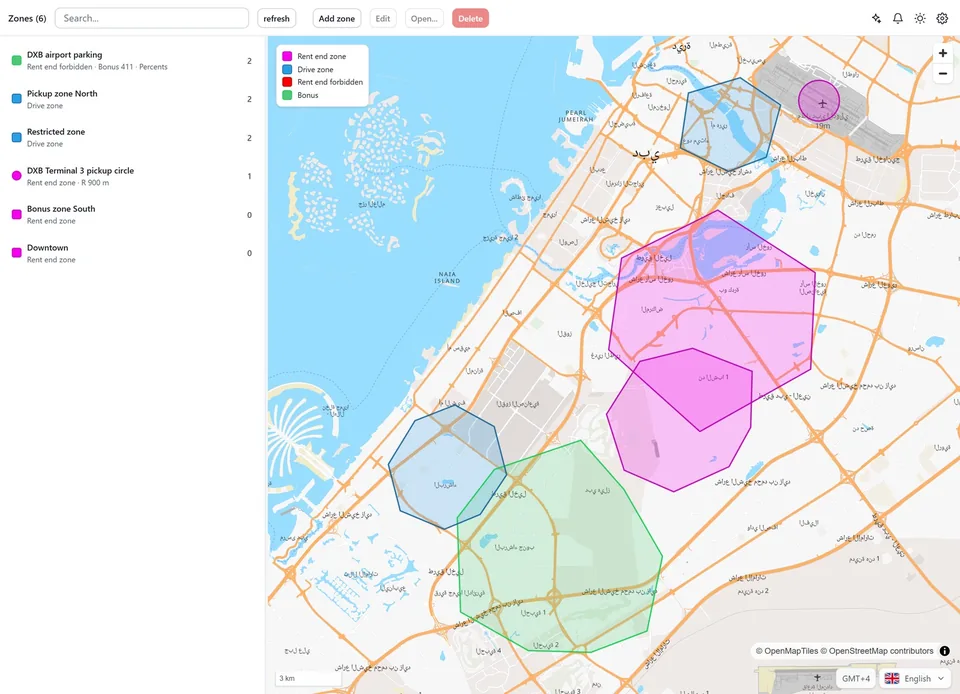
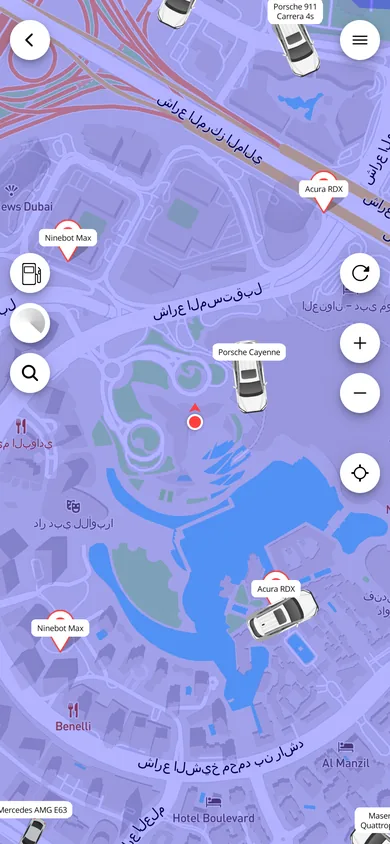
Zones. Rent-end zones, drive zones, restricted zones and an airport parking zone drawn on the map. Customers see the available cars around them in the app.
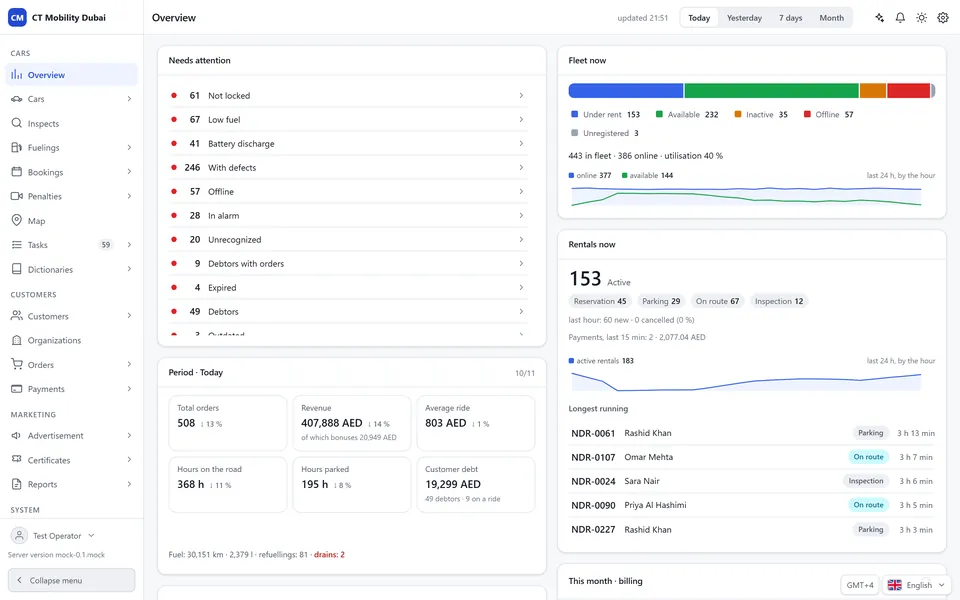
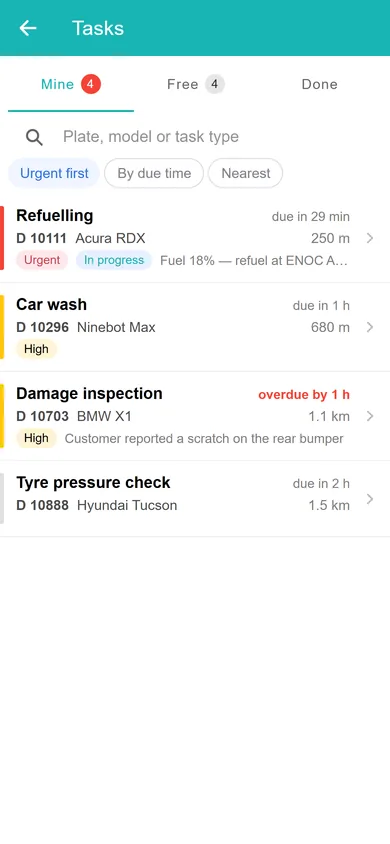
Fleet overview. Utilisation, active rentals, revenue in AED and the cars that need attention: the figures the assistant reads when you ask about your fleet. Technicians get a prioritised task list.
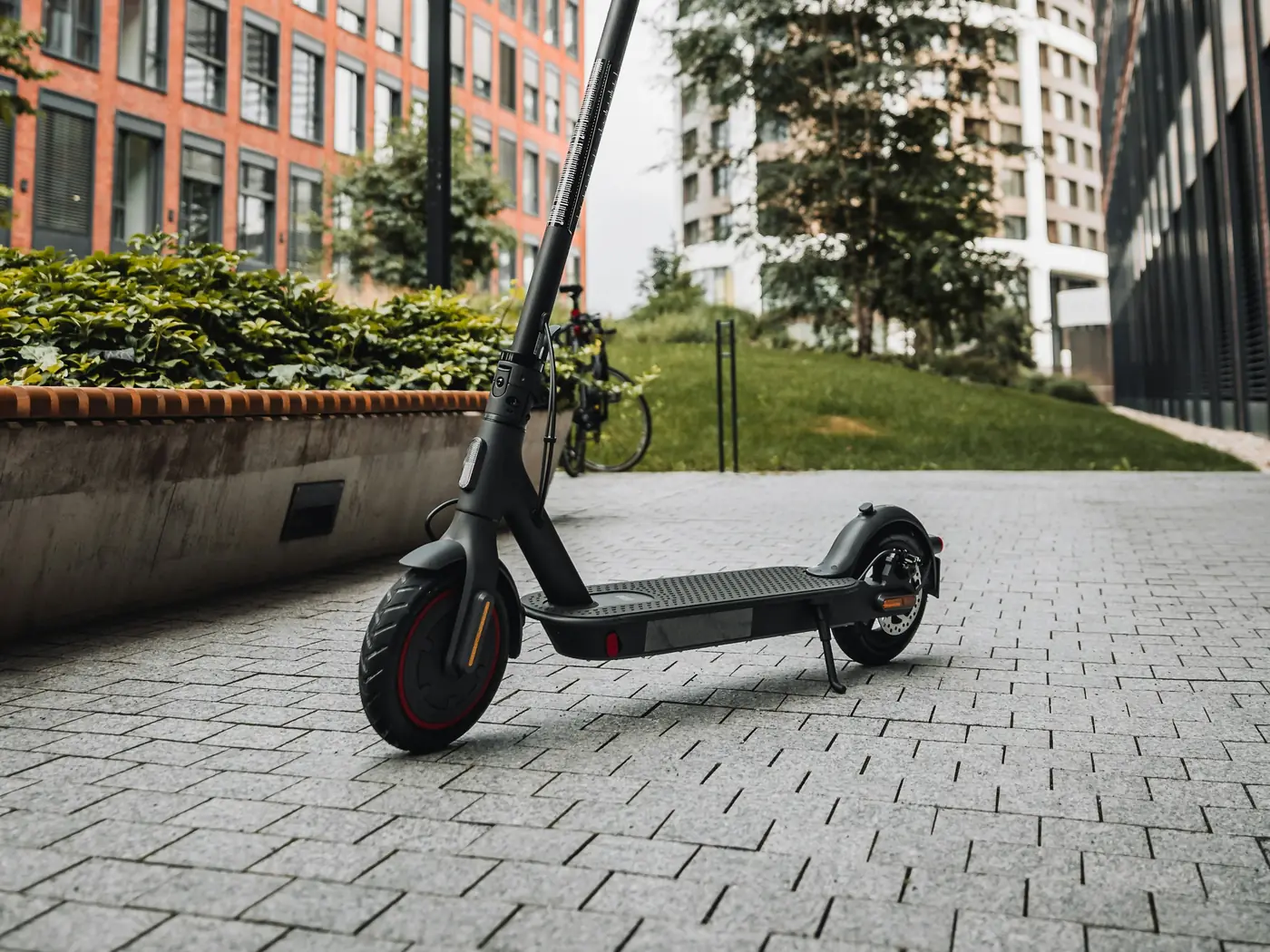
The same platform, and the same AI layer, serve every micromobility vehicle type. Riders unlock e-scooters and bikes with a QR code; for moped sharing, riders verify their driving licence in the app and start the moped keyless. Vehicles connect through IoT modules from the brands listed on the integrations page.
More on e-scooter sharing software and bike and e-bike sharing software. Running cars as well? See the AI car sharing platform.
These are rules you configure in the platform. Read more about geofencing in shared mobility.
| Job | AI, rule or people? | In CT Mobility |
|---|---|---|
| Answer questions about vehicles, rides, riders, zones, payments and alarms | AI assistant | Yes: the AI Data Assistant in the control panel, and Ask your fleet in ChatGPT, Claude and other MCP clients (on request) |
| Prepare a change, such as a technician task or a tariff update | AI prepares, a person confirms | Yes, through Ask your fleet: read-only by default, each change confirmed, every call in the audit log |
| Block the motor of a scooter that leaves the drive zone | Rule | Yes, configured per zone; not AI |
| Slow scooters down in busy pedestrian areas | Rule | Yes, speed-limited zones; not AI |
| Steer where rides end | Rule | Yes, rent-end zones, no-parking zones, bonuses and extra charges; not AI |
| Decide where to move vehicles | People, or a predictive model in some products | People decide. Ask the assistant where rides started by zone and hour, then plan field tasks |
| Set prices | Rules, or a pricing model in some products | Tariffs, passes and automatic discounts are rules you set; no AI pricing |
| Spot sidewalk riding, bad parking or vandalism on camera | Camera-based AI in some products | Not offered |
When a vendor talks about AI in micromobility, ask which of these jobs is a model, which is a rule, and who confirms the result.
The AI Data Assistant is part of the control panel. Ask your fleet is available to connect on request: we enable the MCP server per CT Mobility installation. Book a demo to see both on our demo fleet, and ask us about connecting yours.
Launching in the UAE? See e-scooter and bike sharing software for the UAE. Evaluating MCP for your team? Read the guide MCP for car sharing, rental and scooter operators, and a worked example of a tariff change through ChatGPT with a preview and confirmation.
CT Mobility Solutions F.Z.C. · E-Commerce Hub BC-8, Ajman Free Zone C1 Building, Ajman Free Zone, Ajman, United Arab Emirates
Your team asks a question in plain words, for example which scooters have open alarms, and the AI answers from your platform data within the employee’s permissions. In CT Mobility this works in the control panel and, on request, in ChatGPT, Claude and other MCP clients.
Yes, through Ask your fleet, the MCP server built into CT Mobility. You add your installation address + /mcp in the AI client and sign in with your employee login. The connection is read-only by default and is available to connect on request.
No. The AI does not move vehicles or create rebalancing plans by itself. It can show where rides started and ended by zone and hour, and your team decides and creates the field tasks.
CT Mobility does not use cameras or AI for this. Riding and parking are steered by rules: drive zones, speed-limited zones, rent-end and no-parking zones, and an automatic motor block outside the drive zone.
CT Mobility does not offer demand prediction. You can ask the assistant about past rides, for example rides per zone and hour last month, and plan from that history.
Yes. Scooters, bikes, e-bikes and mopeds run on the same platform, and the same assistant answers questions about those vehicles, rides, zones, alarms and payments.
Yes, for operators in the UAE and other GCC countries, with a team in Ajman. The AI connection is available on request for each installation. For the UAE, see our e-scooter and bike sharing page for local rules.
The platform works with e-scooters, e-bikes and IoT modules from several brands. Send us your models and modules and we will confirm; the list is on the integrations page.
We have repeatedly proven this in practice with dozens of launched projects and years of successful work. Ask our clients who have tried several IT solutions but still remain with us.




